

Mass Driver Timelines
OnlyFans owner Leonid Radvinsky dies at 43, OpenAI planning to double workforce, Lead Edge capital raises $3.5B for software-focused fund

Happy Monday.
The current thing in tech and business is Elon’s announcement of Terafab, a chip fab facility that he says will manufacture trillions of watts of compute per year.
Today’s lineup
*Peptide debate* Investor & businessman Martin Shkreli vs. Superpower Co-Founder Max Marchione at 12:00 PM
Lead Edge Capital Founder & Managing Partner Mitchell Green at 12:30 PM
Air Co-Founder & CEO Shane Hegde at 12:40 PM
Doctronic Co-Founder Dr. Adam Oskowitz at 12:50 PM
BNY CEO Robin Vince at 1:00 PM
Founders Podcast Host David Senra at 1:15 PM
Daily Op-Ed, by John Coogan
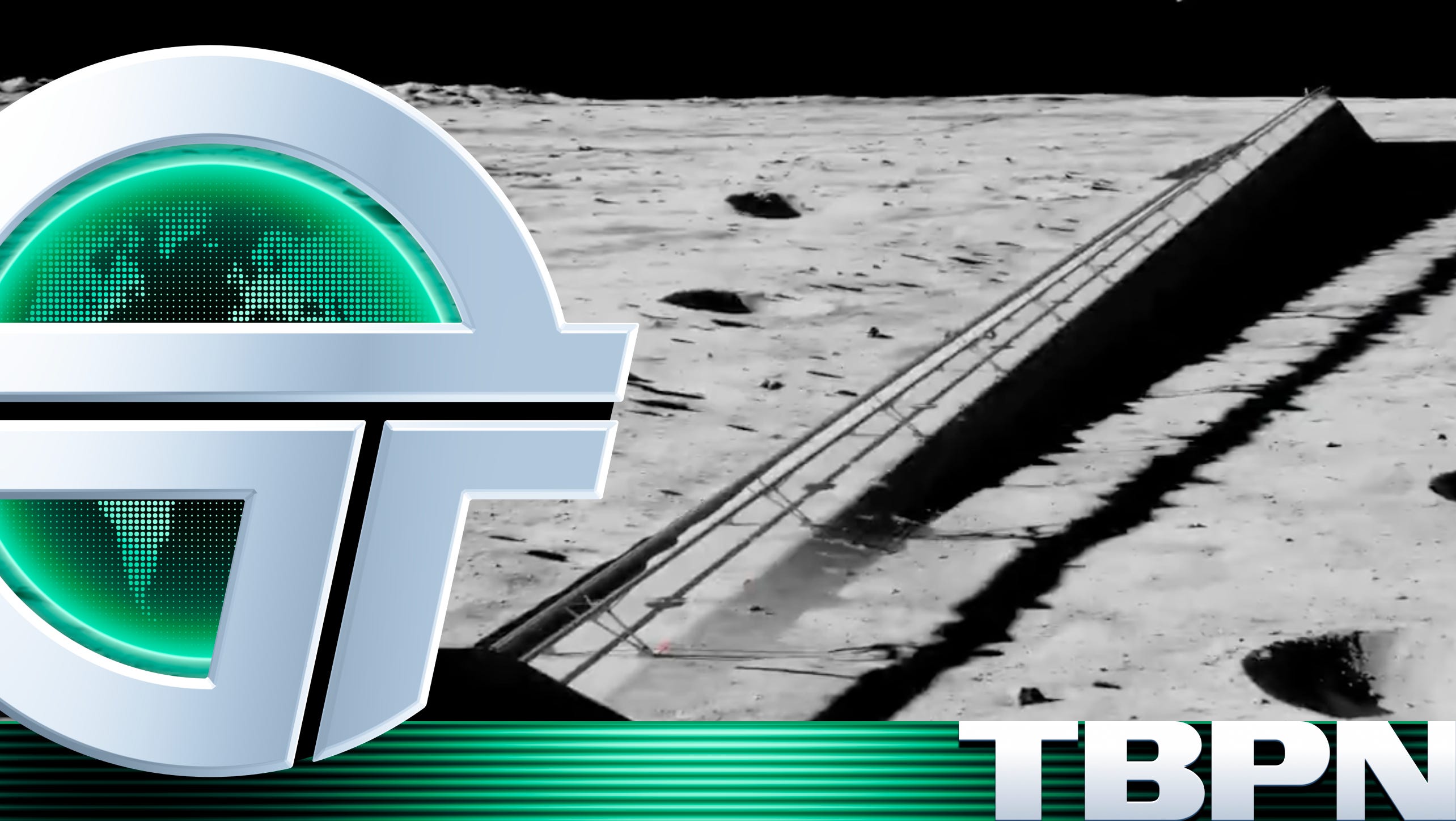
Mass Driver Timelines
Some time last year, it felt like everyone seemed to agree that AGI was 10 years away. It wasn’t that everyone lined up and gave predictions at the exact same time, everyone had different methodologies and ways of sharing their thoughts. For Sam Altman, it was a blog post where he said “It is possible that we will have superintelligence in a few thousand days.” For Andrej Karpathy, it was a podcast where he landed on “AGI Is Still A Decade Away.” Dwarkesh shared an AGI 2032 timeline as the median estimate from his probability density over time.
It was a cool set of discussions to observe because it felt like the industry sort of agreed on fairly reasonable terms of what might constitute the next big binary moment and when it might arrive.
No such agreement exists around when we will have a mass driver on the moon. Elon is working on it though, so it’s worth at least defining what a mass driver is: in simple terms, it’s an electromagnetic launch system fixed on the lunar surface that accelerates a payload to lunar escape velocity. Ultimately, that payload needs to go somewhere useful, maybe Earth, maybe lunar orbit, maybe Earth orbit, but basically it’s a way to get stuff that’s already on the moon somewhere else.
So why do we want this? The main reason is gravity. Launching mass from Earth is expensive because Earth makes you fight a thick atmosphere plus high escape velocity. The moon has no meaningful atmosphere and a much lower escape velocity, about 5,000 mph versus Earth’s 25,000 mph. That changes the economics of moving stuff into space in bulk.
So what are we moving from the moon into space? You’d probably start with basic materials: rock, metal, oxygen, or water. A lot of useful space infrastructure needs heavy shielding. Water, regolith, and other dense materials are good for shielding humans or sensitive equipment from radiation. You can also potentially get propellant from the moon. If you can extract water ice from the moon, especially near the poles, that water can support people directly or be split into hydrogen and oxygen for rocket propellant.
Now we need to quantify what a “working mass driver” even means, if we are to estimate what year it will be up and running. Here are 4 conditions that need to be met:
A permanently installed electromagnetic launcher has to be on the lunar surface (obviously).
It has to launch at least 300 metric tons over a 12-month period. (Literally driving lots of mass).
Let’s aim for 95% mission success and at least 200 launches per year. Failures are going to happen, but we want to get this reliable and at commercial scale.
Lastly, the mass launched from the moon has to be actually put to use. We don’t need to be too specific here. Propellant, shielding, construction, etc all work.
When all 4 of these goals are accomplished, it will be hard to argue that we are in some sort of demo phase or publicity stunt period. I’m working backward from Model 3 level success, not Tesla Semi demo phase.
So how long does this take in the best case scenario? I think the over-under should be around 15 to 20 years. Here’s how it breaks down:
Reach reliable heavy lunar launch capacity. Starship needs to be refueling in orbit, landing on the moon with and without crews, and start routine cargo flights to the moon. This is 3-5 years away.
Then you need to build the power infrastructure. Mass driving hogs electricity, so you need to deploy a 100 kW+ solar array, then build out an energy storage system so you can burst power during launches, and ultimately scale to a multi-MW continuous generation power plant. This is another couple years.
Robotic construction capacity is critical, so you’ll need autonomous construction rovers to lay all the electromagnetic track. You’ll have to solve for insane forces using high acceleration, and deal with thermal expansion during the lunar day and night. Temperatures go from -280°F to +260°F. Probably at least 3 years of work.
The actual mass driver will need to be built on earth, at least most of it. You need to ship hundreds of tons of superconduction coils to the moon. The physics were proven for this system back in the 1970s, but no one ever has done real engineering for moon-based infrastructure on this scale. You’ll also need dozens of dedicated cargo flights just to get the final several hundred ton system up there. Could easily take 5 years.
Then you need to assemble the track sections with humans or more likely robotic crews, integrate the power supply and cooling systems, and test everything rigorously. Integration hell can take years, but should overlap with some of the other milestones.
Lastly, you need to shift into operational launches. Your first payload needs to achieve escape velocity, and at no point can a catastrophic failure result in permanent damage to the mass driver or energy infrastructure itself. This could be another 5 years with lots of variability.
The good news is that once you’ve built it, the launch is the easy part. No drag, no weather, no air resistance. You do have to have a plan for where the mass goes after it’s driven though… you sort of need to catch it, which is a whole other problem. Add up all these projects, and you easily start getting into decades, but that’s totally fine to me! The last thing I want is for technologists to be completely devoid of long-term vision. I don’t want there to be an “end of the tunnel.” I hate this idea of “we get to superintelligence and then become complacent.” I’d much rather get excited about projects many years away that only have a slight chance of working than the alternative: stagnation. So I’m cheering for the mass driver. “Shoot for the moon. Even if you miss, you’ll land among the stars.” And all that.
Headlines
Bloomberg: Musk Says Tesla, SpaceX, xAI Chip Project to Kick Off in Texas
SpaceX releases video of its planned lunar electromagnetic mass driver
FT: OnlyFans owner Leonid Radvinsky dies at 43
WSJ: Mark Zuckerberg Is Building an AI Agent to Help Him Be CEO
FT: OpenAI to double workforce as business push intensifies
Axios: Scoop: OpenAI bets on Altman-backed fusion startup
Bloomberg: Lead Edge Capital Raises $3.5 Billion for Software-Focused Fund
Bloomberg: Electronic Arts $15 Billion Debt Sale Draws $25 Billion Demand
WSJ: OpenAI Taps Former Meta Executive to Lead Ad Push
WSJ: Danone to Buy Protein-Shake Maker Huel for $1.2 Billion
Bloomberg: Thiel’s Founders Fund Backs AI Cow Collar Startup at $2 Billion Valuation
WSJ: Tesla Finally Has Its First Semi-Truck and It’s Already a Hit With Truckers
Bloomberg: Finally, an Opera About Economics
WSJ: Suddenly Everyone in San Francisco Is a ‘Builder,’ Whatever That Means
Posts of the Day


TBPN is brought to you by Ramp.
Ramp is the all-in-one finance automation platform that helps businesses save time and money with smarter corporate cards, spend management, and bill pay.
Special thanks to our sponsors: Shopify, Graphite, ElevenLabs, CrowdStrike, MongoDB, Fin, NYSE, AppLovin, Phantom, Gemini, Cognition, Labelbox, Public, Kalshi, Restream, Vanta, Console, Railway, Figma, Plaid, Okta, Linear, Turbopuffer, Lambda, Gusto, Vibe.co, Sentry, and Cisco.