

Zuck’s AI Vision
Plus: Erebor in talks to raise $1.5B, Situational Awareness invests $400M into Source Foundry, and NVIDIA's $500B AI infrastructure financing package


Happy Monday.
The current thing in tech and business is an OpenClaw agent hacked a gym’s API to move its user up the reservation list for a class.
Today’s Lineup
Yahoo Media President Ryan Spoon at 12:00 PM
Neural Frames Founder & CEO Nicolai Klemke at 12:30 PM
Archer Founder & CEO Adam Goldstein at 12:45 PM
Boeing Lead Product Development Brian Yutko at 12:45 PM
Run of Show by John Coogan
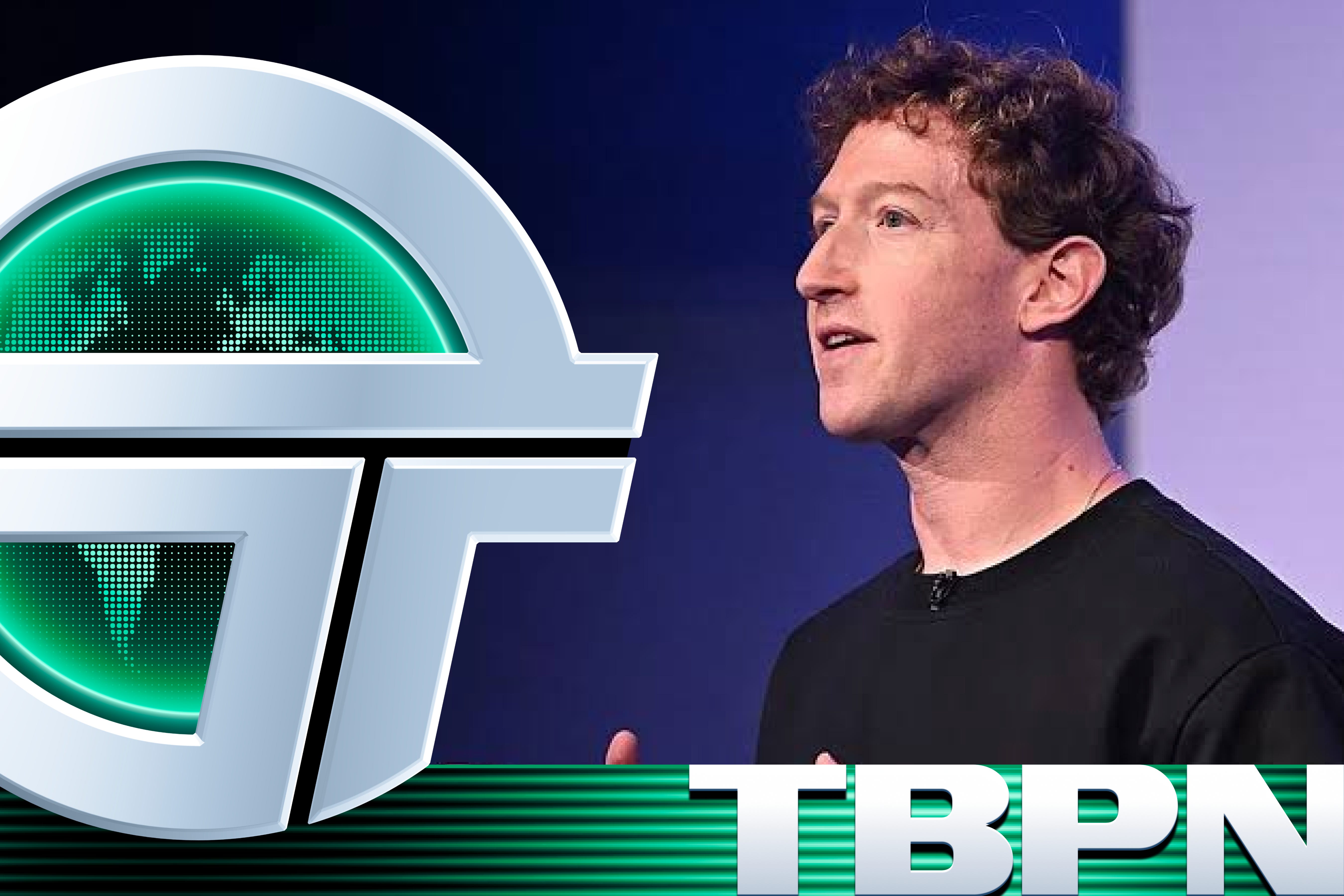
Zuck’s AI Vision
Meta was setup to be an also-ran in the AI race. The Llama project stalled out, their biggest model, “Behemoth”, never shipped (ironic because in the Bible, “behemoth” means a colossal, untamable land creature). They also turned over the entire team and seemed to have to start fresh. But they brought in some great people, and have some really unique advantages. They already build massive datacenters and they have huge surface area to distribute new AI consumer experiences.
SemiAnalysis also laid out a more detailed bull case for Meta Superintelligence 1 month ago. The key point that stuck out to me was that, even though there was some push back to screen recording of Meta employee’s day-to-day work, from a data quality / RL perspective, this is a huge advantage. They basically got a leading data labeling company spun up for “free” (if you disregard the reputational hit).
So following up on his WSJ op-ed, Mark Zuckerberg has released a 6,500 word “encyclical” on the AI future. High level: AI is for “Everyone”. It’s an anti-permanent underclass message, which is good from a comms perspective, but also seems to be born out by the data in the short term.
He takes a shot at fear based marketing early on in the piece:
Still, it is surprising that the discourse from many developing AI is so filled with doom. I do not understand why anyone who believes that AI will eliminate most jobs and much of humanity’s relevance would rush to build that future. The notion that AI is so dangerous that the only safe path is an extreme concentration of power seems inherently problematic. Historically, hoping that an absolute power will benevolently provide for humanity if sufficiently enlightened has not led to safe or positive outcomes.
The obvious answer, that he’s probably thought of but just isn’t saying, is that extreme concentration of power is awesome if you are the one with the power. You have to imagine that most dictators live great lives and wouldn’t want to go live as merely a well-to-do citizen in a free democracy if they could. But it’s a good paradox to point out.
There are some handwavy parts that are basically just guesses about how the future will play out, but I really liked the concrete proposals. Here are my favorites:
For example, in Richland Parish, Louisiana, where Meta is building a large data center, teachers received a $50,000 bonus this year because of the increased tax revenue from our investment. The superintendent told us that teachers are now moving there from across the country and he believes it will become one of the nation’s best school districts.
This is awesome because there’s been a lot of skepticism of money actually flowing from AI companies into the hands of citizens. It’s easy for money to get routed into the government and basically just disappear through a bunch of complex deals. The direct line to meaningful economic outcomes is great.
Our data centers are also designed to be among the most water-efficient in the world. We are committed to being water-positive, meaning that we’ll restore more water than we use in the watersheds where we operate by 2030. In areas with high water stress, our goal is to restore 200% of the water we use.
The water issue was sort of a quagmire early on with that calculation error leading to a lot of misinformation, but it’s not enough to hand wave it off. “Water-positive” is a good term, a very clear goal, and also feels very doable for a company of Meta’s scale.
We help keep electricity prices low by building our own energy-generating infrastructure wherever we invest. This ensures that not only are we not consuming energy that could have gone to the local communities, but in some cases we even supply a surplus of low-cost energy back to the communities. We think this is an important investment principle for sustainability.
The energy statement is a little softer. In “some cases” is doing some heavy lifting there, and I’m sure this will be a bigger battleground in the future. Fortunately, he calls out how far behind America is in nuclear energy and has already made some investments/commitments there to hopefully move the needle. “Countries like China are bringing online 1GW+ of nuclear capacity every other week, so we will need to accelerate building both energy and data centers to remain competitive.”
This news was also paired with the opening of the weights for Muse Glimmer, a 30B parameter dense model that can run locally along with a plan to release the weights for Muse Spark 1.2, their latest foundation model. Makes sense from a business perspective to ramp adoption for businesses that want to cut costs but not use foreign-made models, and it nicely disentangles the geopolitical discussion from the safety discussion. Excited to see what adoption is like in a few months.
Clip Spotlight: Isaiah Taylor caught leaving Valar Atomics’ El Segundo facility BEFORE midnight on a Friday, fueling rumors he’ll finally get a good night’s sleep after the $1B Series B
Headlines
FT: Wall Street giants partner with Nvidia on $500bn AI financing deal
WSJ: Situational Awareness Bets $400 Million on Stealth Chip Startup After Crash
ABC: AI assistant hacks gym website in first known Australian autonomous cyber attack
Zuck: The Future is for Everyone
Tyler Cowen: Act like it is science
WSJ: This Summer’s Hottest Arm Candy Is a Private Equity Boyfriend
Business Insider: The Ball in OpenAI’s court
FT: Start-up bank backed by Palmer Luckey set to raise $1.5bn
The Information: Data Center Bans Top 500 as New York, Texas Join Pushback
WSJ: Selling the Dream of SpaceX Was the Easy Part. Now Elon Musk Has to Hang On.
𝕏 is discontinuing revenue sharing
WSJ: Apple Tests Chinese Memory Chips as Supply Squeeze Bites
Bloomberg: JPMorgan Leads $441 Million Debt Deal for AI Infrastructure Firm
WSJ: China-Free Batteries Made From Salt Are Finally Here
Yahoo: Roku Unleashes 24/7 AI Slop Channel
FT: Turkey’s cyber law shifts sweeping powers to presidency
CBS Evening News: A golden retriever’s seizures are miraculously cured by a duck
WSJ: Blockbuster Earnings Bolster Stocks’ Record Run
The Ringer: The End of Google Search—and the Internet—as We Know It
WSJ: The ‘Jury Duty’ Scam That Cost This Family $25,000
Posts of the Day


Special thanks to our sponsors: Ramp, Shopify, CrowdStrike, MongoDB, NYSE, Codex, Public, Console, Railway, Figma, and Cisco.